
🔎 Quick Match Answer
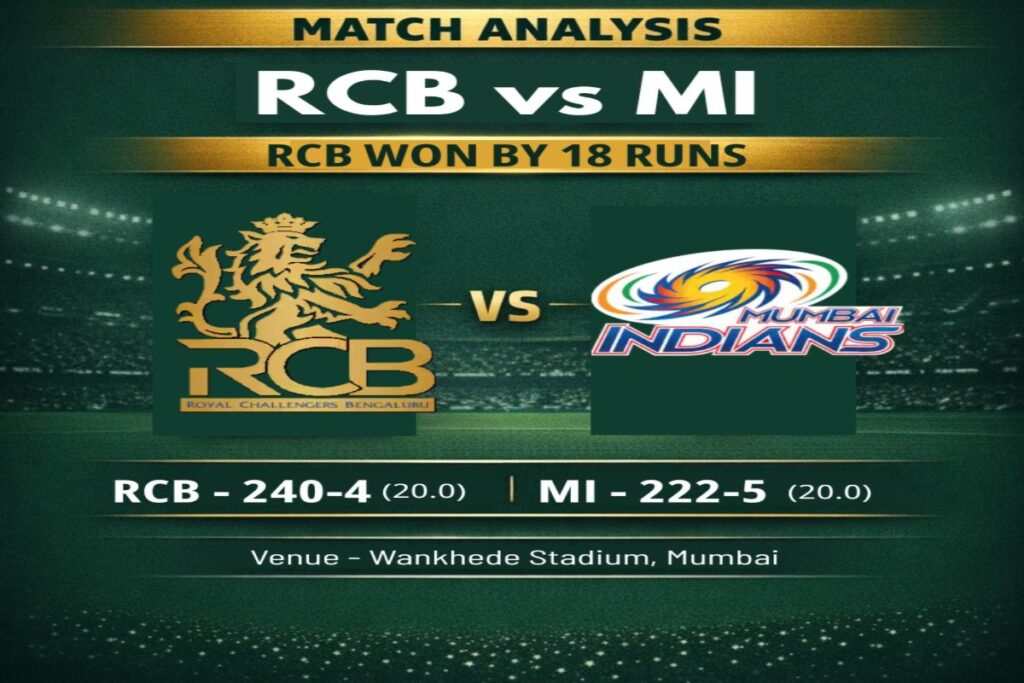
RCB vs MI match Analysis: Royal Challengers Bengaluru beat Mumbai Indians by 18 runs at Wankhede. The match was decided in the powerplay, where RCB’s top order dismantled MI’s attack and built an uncatchable platform.
Thank you for reading this post, don't forget to subscribe!📊 Match Snapshot
- Score: RCB 240/4 | MI 222/5
- Result: RCB won by 18 runs
- Player of the Match: Phil Salt
- Deciding Phase: Powerplay (RCB batting)
🧪 Prediction vs Reality
- Prediction: RCB win; key trigger = early wickets from Jasprit Bumrah
- Reality: Bumrah went wicketless → MI lost control instantly
Verdict: Prediction logic held. The only failure point (Bumrah early breakthroughs) never occurred.
📈 Phase Dominance Report
⚡ Powerplay
RCB blew the game open. Virat Kohli + Salt dominated pace and spin alike.
- 65/0 in 6 overs
- MI had zero tactical response
🔄 Middle Overs
MI got one opening via Kohli’s wicket. Then Rajat Patidar counterattacked instantly.
- Momentum never dropped
- Strike rotation + boundary bursts maintained pressure
💥 Death Overs
Tim David added the finishing spike.
- 240 became psychologically decisive
- MI chase already out of reach
🔥 Phase Verdict
RCB won the match in the powerplay. Everything after that was damage control from MI.
🔬 Why Team Won – RCB vs MI Match Analysis
- Salt’s high-risk dominance paid off – early intent broke MI’s structure
- MI’s toss decision backfired – bowling first without swing = tactical error
- Rohit injury killed the chase – Rohit Sharma exiting removed stability
Read – SRH vs RR Prediction: The One Tactical Flaw That Could End RR’s Perfect Run
📉 Data That Matters
| Metric | RCB | MI |
|---|---|---|
| Powerplay | 65/0 | Disrupted |
| Opening Stand | 120 | Collapsed early |
| Top Score | Salt 78 | Hardik 40 |
| Bumrah | — | 0/35 (4) |
| Final | 240/4 | 222/5 |
🎯 Turning Points
- Overs 1–6: Salt-Kohli partnership broke MI’s plan
- Over 7: Rohit retired hurt → chase destabilized
- Overs 16–20: Patidar + David pushed total beyond reach
🧠 Tactical Breakdown
RCB Insight:
Attack-first powerplay strategy at Wankhede neutralizes even elite bowlers. Salt took calculated risks early → forced defensive fields.
MI Failure:
No Plan B after swing didn’t appear. Lengths remained predictable.
Key Lesson:
At Wankhede, if bowling first, you must restrict under 210. Anything above 220 = game over 80% of the time.
🧾 Player Impact Ratings
| Player | Role | Rating /10 | Impact |
|---|---|---|---|
| Phil Salt | Opener | 10 | 78 (36), destroyed powerplay |
| Rajat Patidar | Batter | 9 | 53 (20), momentum surge |
| Virat Kohli | Opener | 7 | Anchored innings |
| Tim David | Finisher | 8 | Death overs boost |
| Hardik Pandya | All-rounder | 4 | Poor tactical outcome |
| Jasprit Bumrah | Bowler | 3 | No wickets, no pressure |
🧭 What This Means
- RCB: Batting unit peaking → title defense looks real
- MI: Structural issues → no wickets from strike bowler + injury concerns
🔁 What to Watch Next
- Bumrah’s wicket drought: tactical flaw or form issue?
- Salt’s consistency after explosive return
- Rohit’s injury impact on MI’s campaign
🧪 Prediction Tracker
- Prediction: RCB ✅
- Record: 15/19 correct
❓ RCB vs MI Match Analysis -FAQs
Who won the RCB vs MI match?
RCB won by 18 runs.
What decided the match?
Powerplay domination by Salt and Kohli.
Why did MI lose?
- No early wickets
- Rohit injury
- Run rate pressure too high
🔥 Final Verdict
This RCB vs MI match Analysis is simple: win the powerplay at Wankhede, win the match.
RCB executed perfectly. MI failed at the only phase that mattered. Without early wickets, even elite bowling attacks become irrelevant on flat surfaces.